A measured bill paid by quarterly Direct Debit. Receiving a measured bill means you have a water meter.
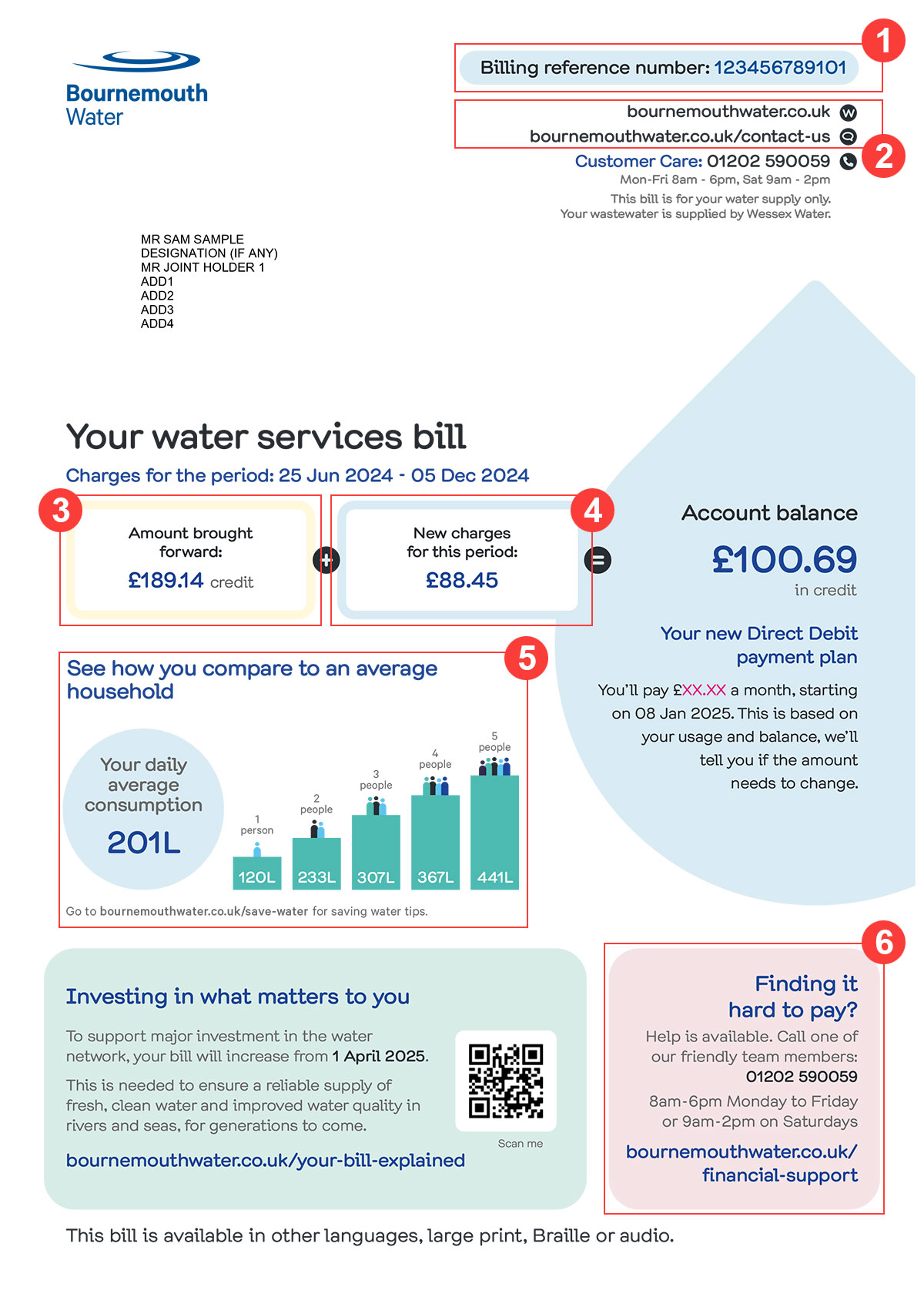
1. Customer number
A unique number that helps identify your account. Have this number to hand if you call us or submit a form online.
2. Contact details
Details of our website and telephone number, if you want to contact us directly about your bill. It’s always a good idea to check our online FAQs first as you may find the information you need there.
3. Amount brought forward
This was the balance of your account before this bill was produced.
If ‘debit’ is shown: Your last payments didn’t fully cover your previous bill, so the remaining amount has now been carried over.
If ‘credit’ is shown: You paid more than the amount shown on your last bill, so the extra has been added towards this bill.
4. New charges for this period
This is your bill amount for the new bill period (the time since your last bill). These charges cover the services you receive from us.
5. Water usage chart
This gives you an idea of how much water you have used, compared to the average household. If you want to find ways to use less water, you can find water saving hints and tips here.
6. Financial support
If you are struggling to pay your water bill, you might be eligible for support. See our financial support page for details of what we offer.
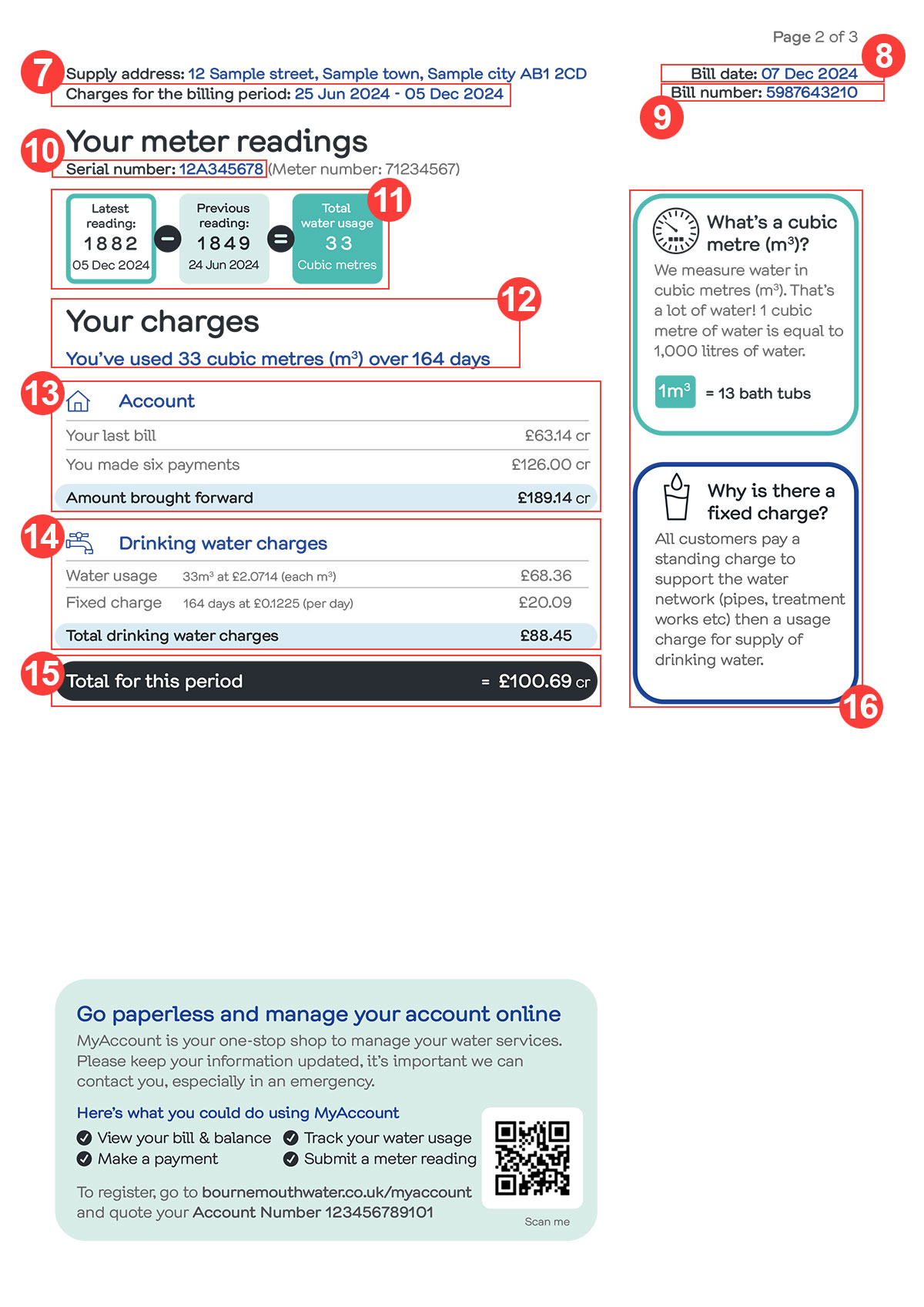
7. Charges for the billing period
Gives the dates of the billing period.
8. Bill date
This tells you when the bill was produced.
9. Bill number
This is for reference. It’s useful if you need to contact us to query something on your bill.
10. Serial number
This is the unique identifying number of your water meter.
11. Water use
Your water use is calculated by working out the difference between your previous meter reading and your most recent reading, showing you the total cubic meters used for that billing period.
12. Your charges
How many cubic metres have been used over the billing period.
13. Account balance
The amount brought forward from your last bill, before we look at the charges for this billing period. This might be credit (money on your account) or debit (outstanding amount to pay).
14. Drinking water charges
We multiply the number of cubic metres of water you’ve used by the charge for drinking water per cubic metre. You also pay a fixed charge per day. We combine these to give a total for drinking water charges.
15. Total charges
The combined total of your drinking water charges.
16. Messaging boxes
We use these to answer frequently asked questions. If you have a question, these might help you.